Inclusion Strategy Toolkit for Schools.
One inclusion priority | A clear plan for what to do next
Every mainstream school in England must publish an inclusion strategy by 31 December 2026. Our free toolkit helps senior leaders cut through the noise, highlighting one priority and helping them turn that priority into practice. We focus on Principle 3: high-quality adaptive teaching and a curriculum for all, with secondary support for other principles.
-
Deadline: 31 December 2026
-
Who: every mainstream school in England. Each academy in a trust publishes its own strategy
-
Built around: the DfE's seven principles of inclusion
-
Funded by: the Inclusive Mainstream Fund, from 2026/27
-
Ofsted: Inclusion is now a distinct evaluation area, and inspectors look at pupils' actual experiences, not just policies
Access the toolkit
What's in the toolkit?
The Inclusion Strategy Companion:

A 17-page guide, plus a 3-page printable planning template, to help you write your Inclusion strategy for the 31st December deadline.
Our Inclusion white paper:

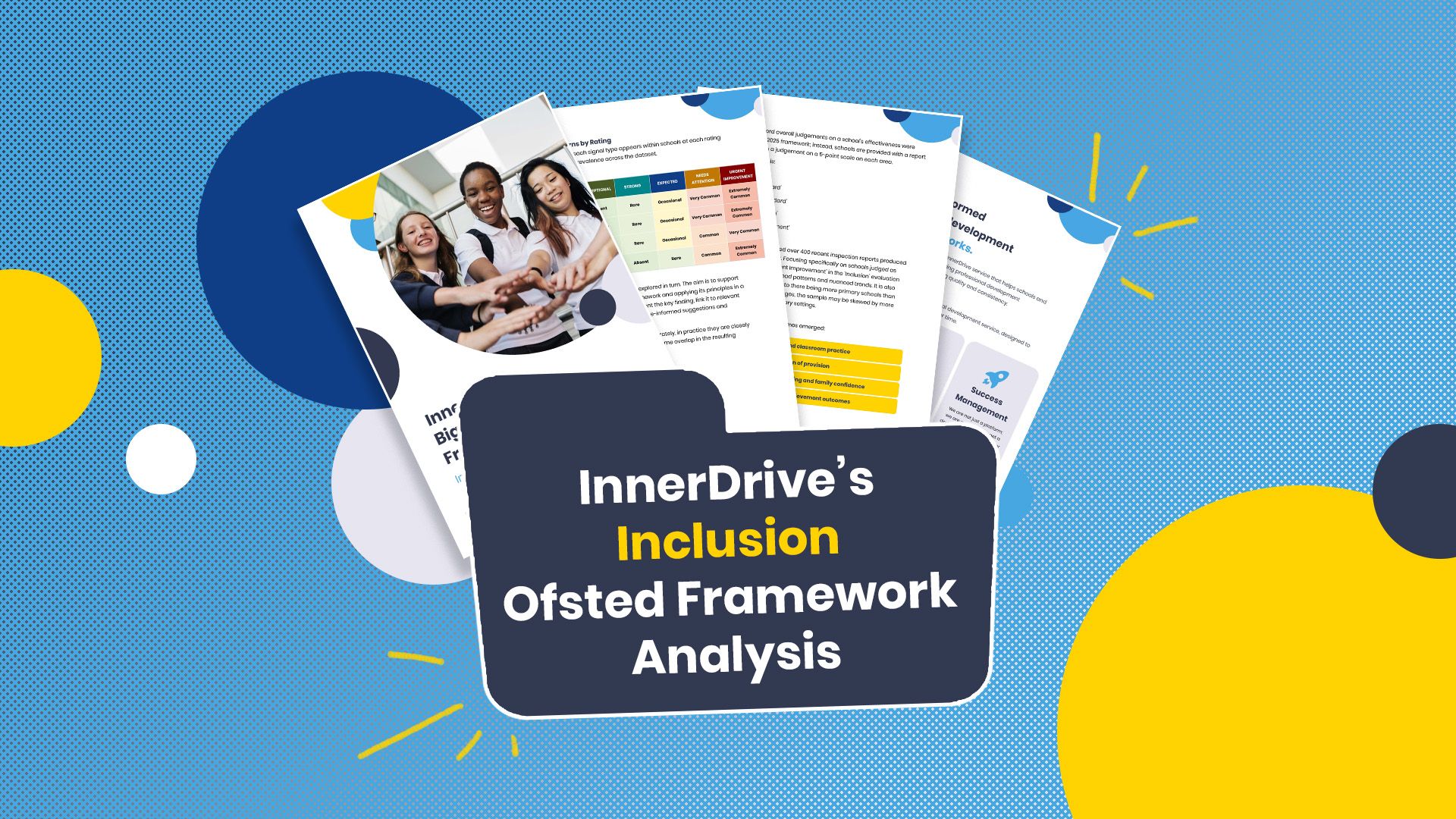
Findings from our analysis of Ofsted inspections under the new framework, focusing on Inclusion provision.
Curated webinars and podcasts:
Differentiation vs Adaptive Teaching, ADHD and Autism, Ofsted New Framework Analysis: Inclusion, and Sense of Belonging with Jon Hutchinson
Additional resources:

Links to our Inclusion resources and our information pack full of further Academy info.
What your inclusion strategy needs to include
The DfE asks schools to set out:
-
The barriers to learning and participation across your pupils
-
The activities you're investing in to remove those barriers
-
Your intended outcomes
-
A review of the previous academic year
The DfE encourages schools to focus on a small number of approaches, implemented well, rather than trying to do everything at once. That's exactly what this toolkit helps with, through informational videos, a handy follow-along strategy companion and in-depth whitepaper.
The seven principles of inclusion.
Your strategy is planned against seven principles:
-
Ambitious leadership and governance that embeds inclusion
-
Evidence-based support prioritising early intervention
-
High quality adaptive teaching with curriculum designed for all learners
-
Enriching provision beyond the classroom that all children can access
-
A safe and respectful culture fostering belonging, attendance, and participation in learning
-
Strong partnerships with families and wider services
-
Inclusive environments with continuous improvements to accessibility
The Inclusion Toolkit and InnerDrive resources focus most on Principle 3, because high-quality teaching reaches every pupil, every day. It's where well-planned staff training can make the biggest difference.
Inclusion isn't about lowering the bar
Inclusion starts with identifying the barriers that stop pupils accessing learning, then removing or reducing them. It isn't simply identifying pupils with SEND, treating every pupil identically, or creating a different plan for every child.
It's not about lowering the bar, but lowering the barrier. Inclusive teaching means high expectations plus the right support.
How the toolkit works
Understand what has changed with inclusion under Ofsted's renewed framework and the Inclusive Mainstream Fund
Choose your priority using the Ladder of Inference, so you act on evidence rather than assumptions
Understand the learner experience with three simple questions: Observe, Locate, Understand
Plan your implementation using the EEF's four stages: Explore, Prepare, Deliver, Sustain
Measure what matters, combining pupil voice, staff observation and indicators like attendance and participation
Who it's for.
Senior leaders and budget holders in schools, multi-academy trusts and 16+ providers who are writing their inclusion strategy and planning how to use the Inclusive Mainstream Fund.
Frequently asked questions.
When does our inclusion strategy have to be published?
Every mainstream school in England must publish its inclusion strategy on its website by 31 December 2026.
What must an inclusion strategy include?
The barriers to learning and participation across your pupils, the activities you're investing in to remove them, your intended outcomes, and a review of the previous academic year.
What are the seven principles of inclusion?
Leadership and governance, evidence-based early support, high-quality adaptive teaching, accessible enrichment, a culture of belonging, partnerships with families and services, and inclusive environments.
What is the Inclusive Mainstream Fund?
New DfE funding from 2026/27 to help mainstream schools become more inclusive by design. It isn't a budget for individual pupils. Schools should use it strategically to strengthen provision across their whole cohort, for example through adaptive teaching, early intervention and staff training.
Do academies in a trust need their own inclusion strategy?
Yes. Each academy in a trust publishes its own strategy, even where the trust pools some activity.
Is the toolkit free?
Yes. Fill in the form and you'll get instant access to the toolkit, which includes our Inclusion Strategy Companion, printable template, our Ofsted Inclusion Whitepaper, a selection of brilliant webinars and podcasts, and more.